
ART&CULTURE / 2025.06.07
Ayaka Wada| QUI x Shinsaibashi PARCO Art Mikata (April 5)

There is no right way to appreciate art. But there are some tips to enjoy art more. Koho Suenaga, the author of "Art Thinking from the Age of 13" (Daiyamondosha), an art teacher who advocates "output appreciation" that explores new perspectives while freely expressing what you feel, is a series of art exhibitions with guests.
The fourth guest is singer and actress Ayaka Wada. We asked Mr. Wada, who majored in art history at university and studied art at graduate school, about the Kansai Art Annual 2025 CO (~ June 22) being held at Shinsaibashi PARCO.
-
PhotographKei Matsuura(QUI/STUDIO UNI)
-
StilingPARCO
-
HairMakeNatsuki Watanabe(Riina)
-
TextI'm shy.
-
Art DirectionKazuaki Hayashi(QUI/STUDIO UNI)
-
EditSeiko Inomata(QUI)
-
ProduceShun Okabe(QUI)
This time, we asked the author Ayaka Miyata to listen to their outputs.

Miyata: Keywords that are always conscious of in production appeared in the words of the two people. For example, the word "life force" is a word that was incorporated into the title of past solo exhibitions.
And that's right, he said, "It can be caught as if it is rising or decaying." When you live a flower, you can use it in a symmetry with "flower arrangement". But "ikebana" can live in asymmetry. There are various theories for the reason, but "Japanese people feel that they are beautiful not only when the flowers are open, but also when they decay and change their shape, so they calculate the decaying figure and make use of it." I thought it was interesting. That's why I'm incorporating that element into my work.

Wada: Certainly, in Japanese culture, we value the decay of temples and Buddha statues. You may not recognize that it is "decayed" in the first place.
Miyata: I think so. It's just like a flow of life.
Suenaga: That's why the feeling of life and the feeling of decay can coexist. On the other hand, was there something different from Mr. Miyata's idea?
Miyata: That's right.…When I talk about the technical part, the thread part is sewing machine embroidery.
My work is programming the data of sewing machine embroidery and adding "bugs" to it. I don't use any cloth, but I'm sewing it tightly with only thread.

Wada: Certainly, embroidery is basically something that sews on cloth like the clothes I wear today, isn't it?
Miyata: That's right. In addition, it is originally stitched with a uniform seam according to the cloth. In my work, I'm breaking it down. In this work, we add a bug in the direction of "compressing" embroidery, and in the work selected by Mr. Wada first, we add a bug in the direction of "expanding".
You mentioned earlier that "various colors are mixed", but since the sewing machine is sewn with upper and lower threads, using different colors can create a gradation that can not be said.
By adding a bug to the data and creating it in a sewing method that cannot be done, new details will be created.…I feel that it is close to the evolution of life and the sensation of manipulating genes. "Bugs" are originally an error and should be a failure, but it feels like new fun and values are born from it.

Wada: It's funny!
By the way, is the cloth part in the background of the work like grandma used in dressmaking? My grandmother is a hobby of dressmaking, and there are many cloths in the room, so I felt very familiar to me.
Miyata: That's exactly right! My grandmother, who died three years ago, was a hobby of patchwork and collected cloths from various countries and eras. I grew up surrounded by that cloth, so cloth was like a pictorial book that could imagine a country I had never visited or a time when I didn't live, or a creature I had never seen before.
Wada: For me, cloth was something in everyday life, so I felt it would be nice to become such a work.
Also, in Japan, I feel like I don't see much cloth with the pattern of such real creatures.

Miyata: It is a feeling that people born and raised in Japan can't imagine. In the end, I want to create something that feels like I can't make, so I want to incorporate such external elements.
Suenaga: There is also an error or accidental part that is inspired by such external part.
Miyata: That's right. Rather than configuring everything with my own intention, I would like to create it by incorporating bugs and coincidences.
Wada: Today, while watching the work, it was Miyata's work that I really liked first, so it was fun to talk about it! I'll go see you again.

Other Posts
-
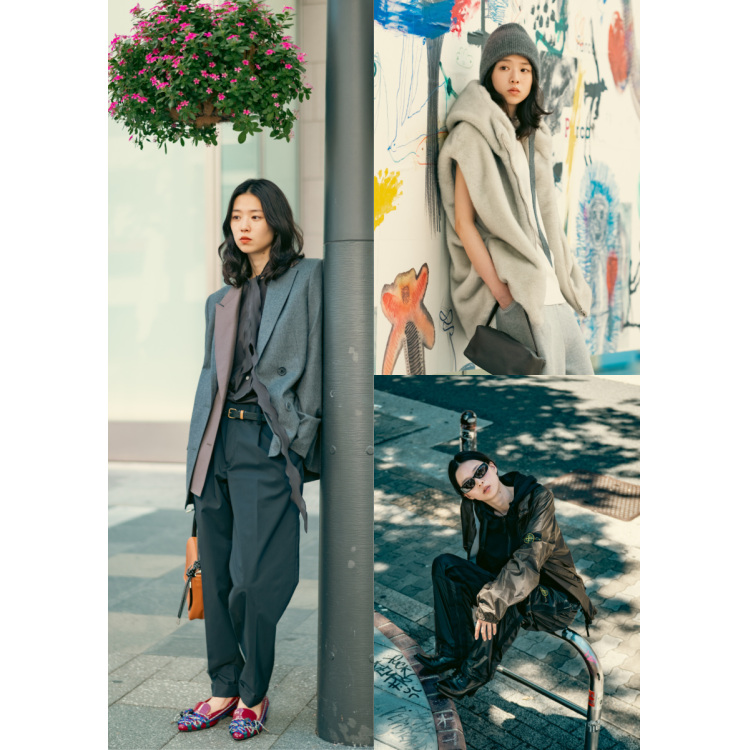 FASHIONThe Fashion Post × SHINSAIBASHI PARCO 2025 AW COLLECTION2025.08.07
 -
 FASHIONHello New Season -2025 AW-2025.08.07
 -
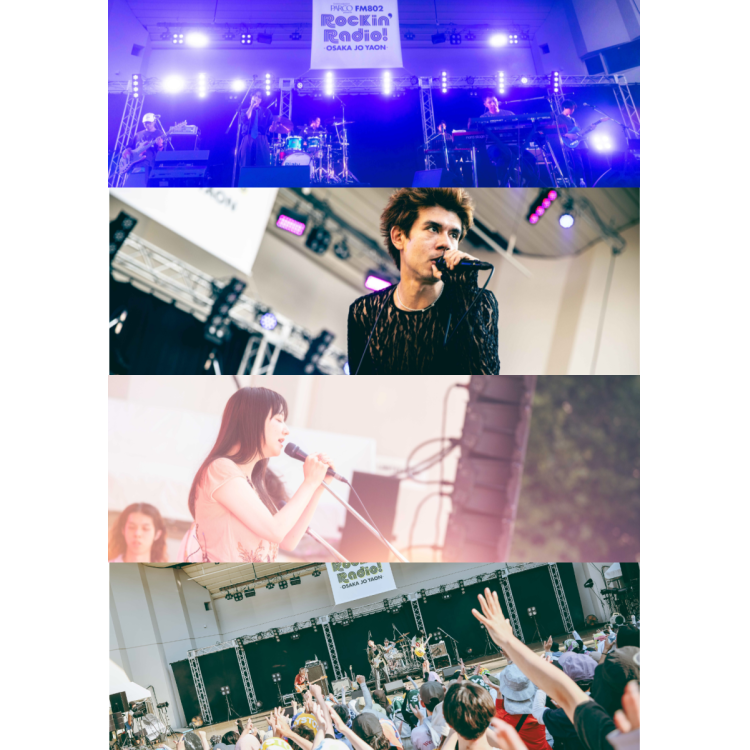 ART&CULTURELIVE REPORT & SNAP| Watching artists gather! Playback of “Shinsaibashi PARCO presents FM802 Rockin’ Radio!”2025.07.12
 -
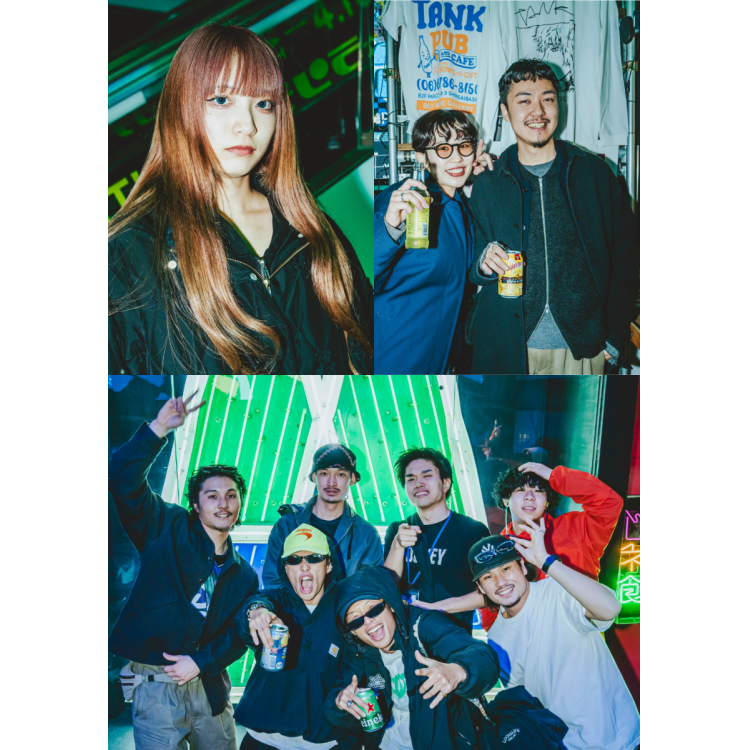 FASHIONSNAP PHOTO| Infiltration of PARCO NIGHT OUT ’25, an all-night event commemorating the 4th anniversary of Shinsaibashi Neon Shokudo Street! SNAP for the fashionable guys!2025.04.12